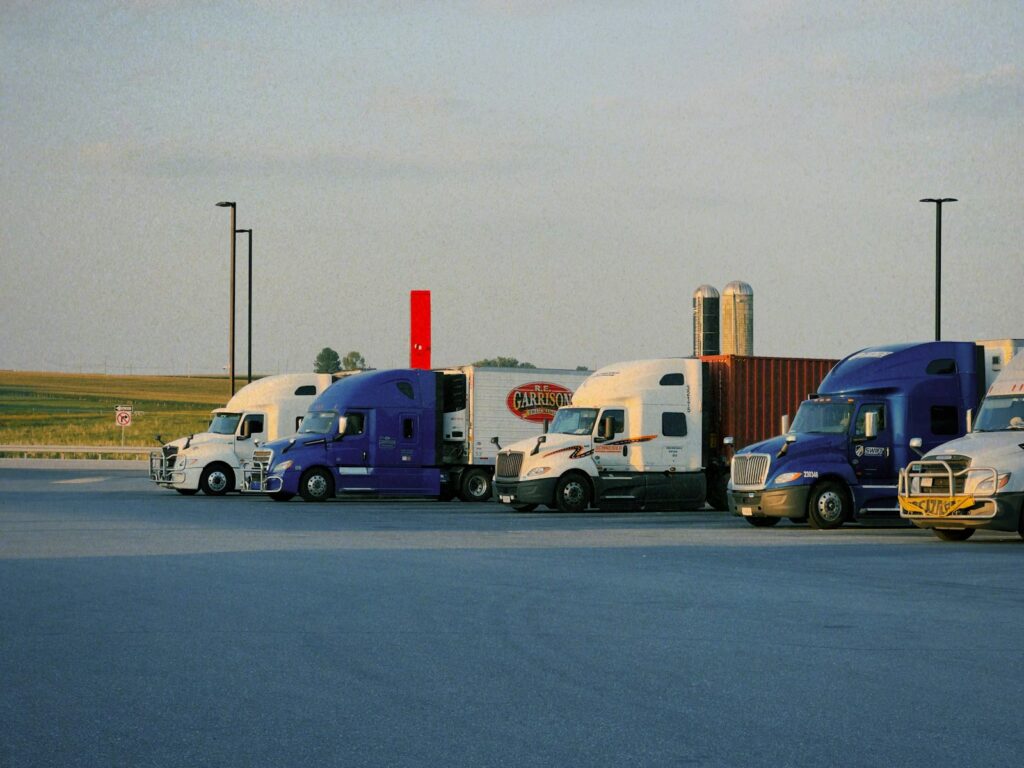
Best Freight Factoring for Small Fleets (2026): Top 5 Ranked for 2-10 Trucks
If you’re running 2 to 10 trucks, the factoring equation changes. You’re past the solo owner-operator stage where any factor will take you, but you’re not the 100-truck fleet that gets custom rate cards. You’re in the middle — where the wrong factor quietly bleeds 0.5% per invoice and the right one cuts your cost of capital, tightens your collections, and gives your drivers a fuel card that actually pays for itself.
Below we rank the best freight factoring companies for small fleets in 2026, based on real rate brackets, fleet-focused features (multi-driver dashboards, fuel card depth, broker credit databases), and the concession power you should be negotiating at 2-10 trucks.
Quick pick: top 5 for small fleets
| Rank | Factor | Best for | Rate range |
|---|---|---|---|
| 1 | RTS Financial | Fleets needing the deepest broker credit data | 1.5% – 3% |
| 2 | Apex Capital | Fleets that live on the fuel card | 1.6% – 3.5% |
| 3 | Triumph | Fleets that want bank-grade tech & reporting | 2% – 3.5% |
| 4 | OTR Solutions | Non-recourse without long contracts | 1.5% – 3.5% |
| 5 | TBS | Fleets that want back-office + factoring bundled | 2% – 4% |
Looking at every segment, not just small fleets? See our master ranking of the best freight factoring companies in 2026.
Why small fleets need a different factoring playbook
A solo owner-operator factors maybe $15,000–$30,000 a month. At that volume, most factors treat you as a commodity — standard rates, take-it-or-leave-it terms. But once you hit 2–3 trucks, your monthly volume jumps to $40,000–$100,000+, and suddenly you have something factors actually want: consistent, predictable volume.
That leverage is real, but most small fleet owners don’t use it. They sign the same contract they got as a one-truck operation and never renegotiate. Meanwhile, the factor is making more money off their account every month.
Here’s what changes at 2–10 trucks that most carriers miss:
Rate negotiation opens up. At $50K+/month in factored invoices, you can push for 0.25–0.5% lower rates than the advertised range. Most factors won’t volunteer this — you have to ask. And if your average invoice size is above $2,000, that’s even more leverage because it costs the factor the same to process a $1,200 invoice as a $4,500 one.
Multi-driver features matter. When it was just you, a basic portal was fine. Now you need your drivers submitting paperwork from the road, and you need to see which trucks are generating revenue and which ones are sitting. Not every factor has a dashboard built for that.
Fuel card programs scale differently. A fuel card saving $0.08/gallon across one truck is nice. Across 6 trucks running 2,000 miles each per week? That’s roughly $400/month in savings — which effectively lowers your factoring cost.
Contract terms hit harder. A 12-month contract with a $2,500 early termination fee is annoying for one truck. For a small fleet owner who realizes after 4 months that the factor’s customer service is terrible, it’s a $2,500 hostage situation. Watch the contract length, minimum volume requirements, and exit penalties closely.
Breaking down each pick
1. RTS Financial — best broker credit data for fleet-level decisions
RTS stands out for small fleets because of one feature that matters more when you’re dispatching multiple trucks: their broker credit database. When you’re running 2–10 trucks, you’re probably working with 15–30 different brokers at any given time. Knowing which ones pay in 20 days vs. 60 days lets you route your best-paying loads to trucks that need the fastest cash turnaround.
Their rates sit in the 1.5%–3% range, and at small fleet volumes ($50K–$150K/month), most carriers report negotiating down to the 2%–2.5% range. The fuel card discount is competitive — typically $0.06–$0.10/gallon depending on volume — and they have a multi-driver portal that lets each driver upload BOLs from their phone.
One thing to check: RTS does require a minimum volume commitment on some contracts. Make sure you can hit it consistently even during slow months. If your volume fluctuates a lot seasonally, negotiate a lower floor or a seasonal adjustment clause.
2. Apex Capital — best fuel card program for fleet savings
Apex’s selling point for small fleets is their fuel card network. They partner with most major truck stops — Pilot/Flying J, Love’s, TA/Petro — and the per-gallon discounts get better as your fleet volume increases. For a 5–8 truck fleet running long haul, the fuel savings alone can offset a meaningful chunk of your factoring fees.
Their factoring rates range from 1.6%–3.5%, which puts them slightly above RTS at the low end. But when you add the fuel savings, the net cost can be competitive. They also offer a fleet management dashboard, though it’s not as detailed as some competitors for multi-truck visibility.
The downside: Apex typically uses recourse factoring, meaning if a broker doesn’t pay within the agreed timeframe, the invoice comes back to you. For small fleets where one unpaid $5,000 invoice can wreck a month’s cash flow, this matters. Ask specifically about their recourse timeline and what happens when a broker pays late.
3. Triumph Business Capital — bank-grade tech for growing fleets
Triumph is owned by a publicly traded bank (TBK Financial, NYSE: TBK), and it shows in their technology stack. Their online portal and reporting tools are more polished than most independent factors, with detailed analytics on your factoring history, aging reports, and cash flow projections.
For small fleet owners who want to grow past 10 trucks, Triumph’s infrastructure scales well. But that bank-grade polish comes with bank-grade complexity — their contracts tend to be longer (12–24 months is common), and the early termination fees can run $2,500+. Their rates (2%–3.5%) are mid-range, and they’re less flexible on negotiation for fleets under $100K/month in volume.
Best fit: small fleet owners who plan to scale aggressively and want a factor that won’t require switching at 20, 50, or 100 trucks. If you’re content staying at 5–8 trucks, you might find more flexibility elsewhere.
4. OTR Solutions — non-recourse without the lock-in
OTR’s main advantage for small fleets is their contract flexibility. They offer month-to-month agreements with no minimum volume requirements on most plans — rare in the factoring industry. If you’re not sure how your fleet growth will play out over the next year, that flexibility has real value.
They also offer non-recourse factoring, which means if a broker goes bankrupt or simply refuses to pay, OTR absorbs the loss, not you. For a small fleet where one bad broker can eat your entire month’s profit margin, non-recourse is worth paying a slightly higher rate for.
Their rates (1.5%–3.5%) are competitive, but they tend to sit at the higher end for fleets with lower volume. The technology is solid but not exceptional — functional portal, mobile app for BOL uploads, standard reporting. If you need best-in-class tech, look at Triumph. If you need contract flexibility and risk protection, OTR is hard to beat.
5. TBS Factoring — back-office bundling for fleet operations
TBS takes a different approach: they bundle factoring with back-office services like invoicing, collections, and accounts receivable management. For a small fleet owner who’s still handling their own bookkeeping and paperwork — which, honestly, is most owners at the 2–5 truck stage — that bundling can save 10–15 hours per week.
The tradeoff is cost. TBS rates range from 2%–4%, higher than most competitors, because you’re paying for the back-office services on top of the factoring. Whether that’s worth it depends on what your time is worth. If you’re spending 15 hours a week chasing broker payments and managing paperwork instead of finding loads and managing drivers, the math might work.
Best fit: fleet owners who are drowning in admin work and want one company handling collections, invoicing, and cash flow. Not the best fit if you already have a bookkeeper or dispatcher handling that side.
What to negotiate when you have 2–10 trucks
Most small fleet owners don’t realize they have negotiating power. Here’s what to push on:
Rate tiers. Ask for a rate schedule that drops as your volume increases. Something like: 2.5% up to $50K/month, 2.2% from $50K–$100K, 2% above $100K. Most factors will agree to this because it incentivizes you to factor more with them.
Contract length. Push for 6 months or month-to-month instead of 12–24 months. If they insist on 12 months, negotiate a lower early termination fee or a 90-day out clause after the first 6 months.
Reserve release timing. Most factors hold 3%–5% of each invoice in reserve until the broker pays. Ask for weekly reserve releases instead of monthly. That cash sitting in reserve is your money — get it back faster.
ACH fees, wire fees, and hidden charges. Some factors charge $3–$5 per ACH transfer, $25 per wire, and monthly “account maintenance” fees that add up. Get a full fee schedule in writing before signing, and negotiate flat monthly fees instead of per-transaction charges when possible.
Fuel card terms. If the factor offers a fuel card, ask what happens if you leave. Some factors lock you out of fuel card balances if you terminate the factoring agreement. Make sure unused fuel card funds are yours regardless of the factoring relationship.
The bottom line
At 2–10 trucks, you’re in the sweet spot where factors actually compete for your business but most carriers don’t realize it. Don’t accept the first rate card you see. Get quotes from at least three factors on this list, and use the competing offers to negotiate better terms with your top choice.
If I had to pick one for a small fleet just starting the search: RTS Financial gives you the best combination of competitive rates, broker credit data (which matters more at fleet scale), and a portal built for multi-truck operations. But your mileage will vary — literally — depending on your lanes, volume, and how much you value contract flexibility vs. feature depth.
Want a recommendation based on your numbers? Calculators and comparison tables are a good start, but every fleet is different. Tell us about your operation and we’ll match you with the factoring company that actually fits — based on your volume, lanes, and how fast you need paid.
Not sure where to start? We talk to carriers every week about which factoring company fits their operation. Tell us about your fleet and we’ll point you in the right direction — free, no strings attached.
Related Resources
Freight Factoring USA Editorial Team
15+ years combined experience in trucking logistics and freight finance. We interview real truckers, verify rates directly with companies, and update our reviews quarterly. Our mission: help carriers make informed factoring decisions.


![Freight Factoring for New Carriers [How to Start]](https://freightfactoringusa.com/wp-content/uploads/2024/10/iStock-1395666017-1-1024x612.jpg)